

Living with pets is a lot of fun—and a lot of work. Carpets can quickly become a magnet for pet hair, stains and lingering odors. Finding a cleaning method that actually works (and is safe for your animals) is key to keeping your home looking and smelling fresh.
If you’re a pet owner in the Roseville area, the good news is you don’t need a complicated routine. With the right tools and a few proven techniques, you can tackle everyday messes and stay ahead of the bigger ones.
Below, you’ll find practical options—from DIY spot treatment to deep cleaning—plus tips for pet stain removal, odor control and keeping fur under control between cleanings.
Why carpet cleaning matters when you have pets
Regular carpet cleaning does more than improve how your floors look. It helps cut down on allergens like dander, removes odor-causing residue and keeps stains from becoming permanent. Consistent maintenance can also extend the life of your carpet, which matters when paws, claws and high traffic are part of daily life.
Most pet-related carpet issues get worse the longer they sit. The sooner you remove hair, dirt and organic stains, the easier it is to keep fibers soft and colors even.
- Reduce allergens and odors
- Stop stains from setting
- Protect carpet fibers and padding
Common carpet challenges pet owners face
Pet messes tend to fall into a few categories. Accidents are the obvious one—especially urine, which can soak into the pad and create recurring odors if not treated correctly. Then there’s shedding: hair and dander collect in carpet fibers and along baseboards and they can build up fast without the right vacuum.
Over time, pets can also wear down carpet in favorite “hangout” zones or along the routes they run most. Keeping nails trimmed and using runners or area rugs in busy areas helps reduce damage.
- Pet stains and accidents
- Persistent odors from urine, oils and dander
- Wear in high-traffic paths and lounging spots
Carpet cleaning methods to consider
There isn’t one perfect approach for every home, but most pet owners get the best results by combining routine upkeep with occasional deep cleaning.
- Frequent vacuuming: The baseline for controlling hair, dander and tracked-in dirt. A pet hair vacuum (or vacuum with a rubber brush roll and strong suction) makes a noticeable difference.
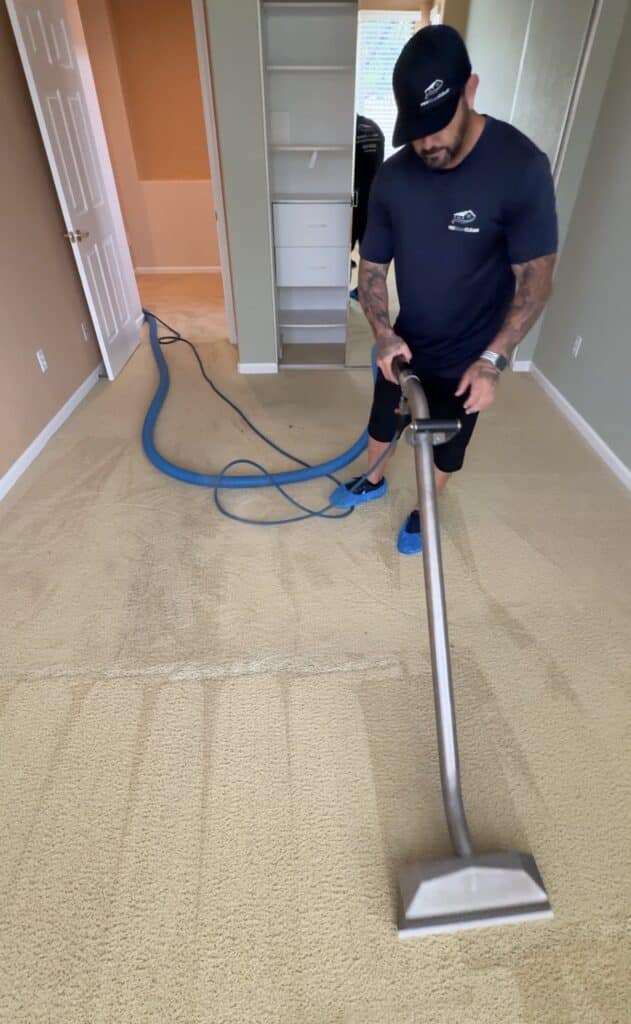
- Hot water extraction (“steam cleaning”): A deep-clean method that lifts embedded grime and helps with many pet odors and stains.
- Enzyme-based spot cleaning: Ideal for organic messes like urine, vomit, or feces because enzymes break down the source of odor.
- Gentle DIY solutions: Helpful for quick touch-ups and mild odors, as long as you avoid over-wetting the carpet.
Steam cleaning (hot water extraction): the most reliable deep-clean option
For most households with pets, hot water extraction is the most effective all-around deep-cleaning method. It flushes debris out of the carpet pile and can remove residue that basic vacuuming leaves behind. Done correctly, it’s also a strong choice for improving indoor air quality because it reduces allergens and built-up oils.
It’s often described as “steam cleaning,” though many machines use very hot water rather than true steam. Either way, the goal is the same: heat + agitation + extraction to lift and remove soil.
To get the best results:
- Vacuum first to remove loose hair and grit.
- Use a pet-safe cleaner and avoid heavy fragrance if your pets are sensitive.
- Don’t over-wet the carpet; too much moisture can drive odors deeper and slow drying.
- Dry thoroughly with airflow (fans, HVAC) before letting pets back on the carpet.
Eco-friendly, pet-safe products that actually work
If you want a safer routine, focus on products that clean effectively without leaving harsh residues behind. Enzyme cleaners are the top pick for urine and other organic stains because they target what causes odors instead of masking them.
For lighter odor control, baking soda can help. White vinegar is also commonly used for spot cleaning, but it’s best for surface-level issues—serious urine odor usually needs an enzyme product and proper extraction.
- Enzyme-based cleaners for urine and organic stains
- Low-residue, pet-safe carpet shampoos for machines
- Baking soda for mild odors (followed by thorough vacuuming)
DIY pet stain removal: quick steps for everyday messes
When accidents happen, speed matters. The longer a stain sits, the deeper it travels into the carpet and pad.
- Blot, don’t rub. Use a clean towel to soak up as much moisture as possible.
- Rinse lightly. A small amount of cool water helps dilute residue—then blot again.
- Apply an enzyme cleaner. Follow label directions and give it enough dwell time.
Tip: Avoid heavy soap mixtures. Many DIY “soapy” solutions leave sticky residue that attracts dirt and makes the spot look worse over time.
When to hire a professional carpet cleaner
Professional cleaning is worth it if you’re dealing with recurring odors, multiple pets, older stains or heavy traffic. Pros have higher-powered extraction equipment and can treat problem areas more thoroughly than most rental or home machines.
If you’re searching for Roseville carpet cleaning services, look for companies that specifically mention pet stain removal and pet-safe products, and ask what methods they use for urine in carpet padding.
- Strong reviews and clear pet-stain experience
- Pet-safe, low-residue products
- Clear drying-time expectations and aftercare guidance
How to keep carpets clean with pets between deep cleans
Maintenance is where most of the “best carpet cleaning for pet owners” results come from. A simple routine keeps hair from building up and helps you catch stains early.
- Vacuum on a schedule (more often in shedding seasons).
- Groom pets regularly to reduce how much hair ends up on the floor.
- Use washable rugs in entryways and favorite pet zones.
- Handle accidents immediately so they don’t soak into padding.
- Rotate furniture and rugs to spread out traffic patterns.
Choosing carpet and tools that make pet messes easier
If you’re replacing carpet, stain-resistant fibers and lower-pile styles are usually easier to maintain. The goal is to reduce how deeply hair and stains can settle.
At home, the right tools matter as much as the right method:
- Pet hair vacuum with strong suction and an effective brush system
- Enzyme cleaner for pet stain removal (especially urine)
- Portable spot extractor for quick cleanup without soaking the area
FAQ: carpet cleaning for pet owners
How often should I deep clean carpets if I have pets?
Many pet owners benefit from deep cleaning every 6–12 months, with more frequent cleaning for high-traffic rooms or multiple pets. Regular vacuuming and spot treatment help stretch the time between deep cleans.
What’s the best way to remove pet urine odor?
An enzyme cleaner plus proper extraction is typically the most effective approach. If urine has reached the pad, you may need a deeper treatment (or professional help) to fully eliminate odor.
Is DIY cleaning enough, or do I need a professional?
DIY methods are great for quick response and routine upkeep. Professional cleaning is useful for deep-set soil, recurring odors, or stubborn stains that keep coming back.
Conclusion
The best approach for pet owners is a simple one: stay consistent with vacuuming, treat accidents quickly with the right products and schedule deep cleaning when buildup starts to show. With a pet-safe routine and the right tools, you can keep your carpets looking clean and feeling comfortable—without turning carpet care into a full-time job.
