
Love your furry friend, but hate the endless battle with their fur? If you’re tired of finding pet hair woven into the sofa, clinging to your clothes, and forming little tumbleweeds in every corner, you are not alone. This constant cleanup is a shared frustration for pet owners everywhere, but it doesn’t have to be a never-ending chore.
The right vacuum can transform your home from a fur-covered headache to a fresh, clean space. Yet, facing a wall of options all claiming to handle animal fur can feel overwhelming. Many vacuums that are marketed for pets simply can’t handle the job, quickly losing suction or clogging with hair. This guide is designed to cut through the noise and provide clear, simple answers.
Finding the best vacuum for pet hair boils down to a few key features: powerful suction, a tangle-resistant brush roll, and effective filtration to trap dander. This guide will help you identify the right type of vacuum for your home and understand the specific technology that finally wins the war against pet hair.
What Type of Vacuum Do You Actually Need for a Pet-Filled Home?
The first decision is choosing the right type of vacuum. The best choice for a small apartment with hardwood floors is rarely the best for a large, carpeted house. Answering this question first will narrow your search from hundreds of models to a handful of ideal candidates.
Thinking about your home and cleaning habits will point you to the right category. The best type of vacuum for animal fur depends entirely on the job you need it to do most often.
- Upright: Best for deep cleaning carpets.
- Pro: Maximum power to pull out embedded hair and dander.
- Con: Can be heavy and bulky to maneuver.
- Stick: Best for quick, daily cleanups.
- Pro: A lightweight, cordless vacuum is perfect for grabbing fur from hard floors and low-pile rugs.
- Con: Less power and smaller dustbins mean they aren’t ideal for a weekly deep clean.
- Canister: Best for homes with mixed floor types and stairs.
- Pro: Combines strong suction with a lightweight wand, making it versatile.
- Con: Dragging the canister body behind you can be cumbersome.
- Robot: Best for hands-off daily maintenance.
- Pro: Automatically manages surface-level fur, keeping “fur tumbleweeds” at bay.
- Con: Can’t deep clean carpets and often gets stuck on cords or high-pile rugs.
Once you’ve identified the right category for your home, the next step is to look for the specific features that make a vacuum a true pet-hair powerhouse.
The 3 “Must-Have” Features That Annihilate Pet Hair
Regardless of the vacuum type you choose, three specific features separate a standard cleaner from a true pet-hair powerhouse. It’s not just about picking up visible fur; it’s about what you can’t see. Truly powerful suction does more than skim the surface—it reaches deep into carpet fibers to pull out the fine, embedded hair and dander that cause lingering odors. A good pet vacuum won’t lose this power as the bin fills up, cleaning just as effectively on the last room as the first.
Next, look at the brush roll. Ever had to perform “surgery” on your vacuum with scissors to cut away a massive knot of tangled hair? New anti-tangle brush roll technology, often using silicone fins instead of traditional bristles, is designed to prevent that exact problem. This feature is a game-changer for homes with long-haired pets, channeling hair directly into the dustbin and saving you from a constant, gross maintenance task.
Finally, what a vacuum does with the air it sucks in is crucial. A standard machine can just blow allergens right back into your home. To combat this, you need a sealed system with a HEPA filter. This ultra-fine net traps over 99% of microscopic dander and pollen. A vacuum with a HEPA filter for pet dander isn’t just cleaning your floors—it’s cleaning the air you breathe.
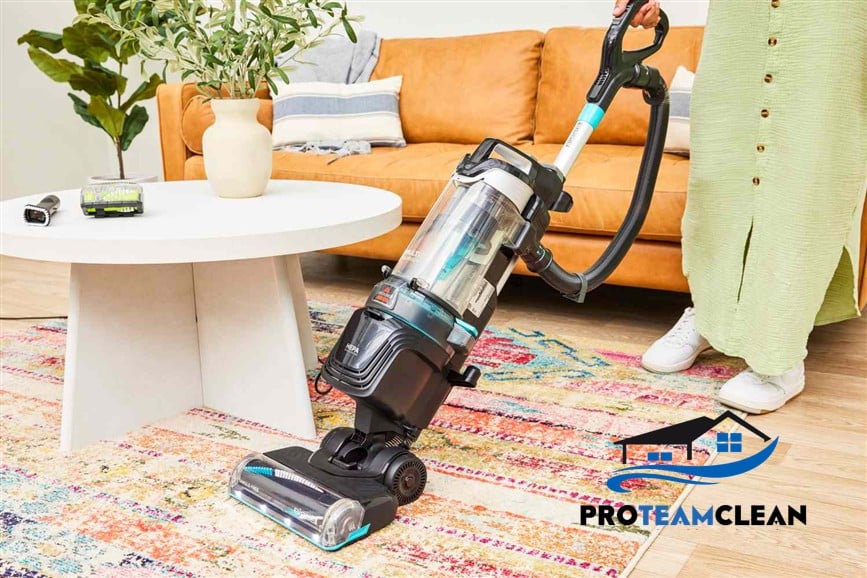
How to Finally Remove Stubborn, Embedded Hair From Your Carpet
You’ve seen it before: you vacuum the entire carpet, but a stubborn layer of hair remains, woven into the fibers like thread. For homes with shedding dogs, suction alone isn’t enough to fix this. The hairs get tangled and embedded deep in the carpet pile, clinging on so tightly that a simple pass of the vacuum does almost nothing.
The design of the brush roll is critical here. A great brush roll for carpet uses stiff bristles to actively agitate, or dig into, the carpet pile. This mechanical action is what breaks the hair’s grip and physically lifts it to the surface where the suction can finally grab it. It’s this aggressive combing that pulls out the fur you can’t even see.
But that powerful agitation is only half the equation. All that loosened hair means nothing if the vacuum lacks the powerful suction for carpet needed to pull it into the bin. A vacuum with a sealed system ensures that no power is lost to air leaks, focusing all its strength at the floor head. This combination—aggressive brush roll agitation followed by direct, sealed suction—is the secret to leaving your carpets truly hair-free.
Bagged vs. Bagless: Which is Truly Better for Pet Allergies?
Even with a great filter, the final step of emptying your vacuum can undo all your hard work. When you dump a bagless canister, it can release a plume of fine dust and dander right back into the air you just cleaned. This process is a major drawback for anyone sensitive to pet dander. While bagless models are convenient and have no ongoing costs, they create a recurring problem at the trash can.
For allergy sufferers, this is where bagged vacuums have a decisive advantage. High-quality vacuum bags are designed for superior dust containment, often using multiple layers of filter media and a self-sealing closure. When the bag is full, you simply pull it out, and the opening automatically seals shut, trapping every particle of dust, hair, and dander inside. There is no messy canister to wipe out and no cloud of allergens to dodge.
The trade-off for this cleanliness is the ongoing cost of replacement bags. You must weigh that expense against the significant health benefit of trapping allergens for good. If you stick with a bagless model, you can minimize exposure by taking the dustbin outside and emptying it directly into your outdoor trash can, making sure the wind carries the dust away from you.
So, when it comes to managing allergens, the sealed system of a quality bagged vacuum is the clear winner.
Dyson vs. Shark for Pet Hair: What’s the Real Difference?
When shopping for a pet vacuum, the Dyson vs. Shark debate is inevitable. Both brands make excellent machines, but they approach the problem of pet hair from two very different angles. Understanding their core philosophies is the key to choosing the right one for your home without getting lost in marketing hype.
Dyson has built its reputation on raw, uncompromising power. Their vacuums are known for intense, consistent suction that can pull deeply embedded fur out of thick carpets. If your biggest problem is ground-in hair that other vacuums just can’t lift, the sheer force of a Dyson is often the answer, though it usually comes at a premium price.
Shark, on the other hand, focuses on solving the common, practical frustrations of vacuuming. Their standout innovation for pet owners is their anti-tangle brush roll technology, designed specifically to prevent long hair and fur from wrapping around the roller. This feature alone saves you the gross and constant task of cutting hair out of the machine, which is a game-changer in a pet-filled home.
Ultimately, the best choice depends on what frustrates you more: hair left deep in the carpet pile or hair tangled around your brush roll. Dyson prioritizes sheer power, while Shark prioritizes clever, convenient features.
The Best Tools for Cleaning Furniture, Stairs, and Your Car
Your vacuum’s main head is great for floors, but what about the sofa where your dog sleeps or the carpeted stairs? Pet hair weaves itself into fabric, so you need a specialized attachment that can actively lift it out, not just suck at it from the surface. For these jobs, the attachments that come in the box are just as important as the vacuum itself.
The most critical attachment is a motorized pet tool. This miniature, spinning brush head agitates and pulls stubborn fur from upholstery, pet beds, and car seats. Unlike a basic crevice tool that relies on suction alone, this active brushing action is what actually breaks the hair’s grip on the fabric, making it a non-negotiable for serious pet owners. Some models even use soft rubber nubs on their upholstery tools, which create friction to gently pull hair from more delicate materials.
With these powerful attachments, a good canister or upright vacuum can easily handle the deep cleaning jobs in your car, saving you the expense of a separate handheld.
Robot Vacuums for Pets: Smart Helper or Just a Toy?
The idea of a machine doing the daily work for you is incredibly appealing. This is where robot vacuums come in, but it’s crucial to understand their role. They are not designed for the same deep clean as a powerful upright or canister model. Instead, think of them as your maintenance crew. People looking for the best robot vacuum for cat litter and fur are really looking for a way to manage the constant, daily shedding and tracking, and for that specific job, these little helpers can be fantastic.
The biggest factor in a robot’s success is your floor type. On hardwood, tile, and laminate, they are champions, effortlessly collecting those fur tumbleweeds that gather in corners and preventing scattered kibble from getting crushed underfoot. They also perform well on low-pile rugs. However, they lack the aggressive brush action and raw power needed to pull deeply embedded hair from plush, high-pile carpets. They simply can’t replace the deep-cleaning muscle of a traditional vacuum on soft surfaces.
Ultimately, a robot vacuum is a supplement, not a replacement. By running daily, it dramatically reduces the amount of fur and dander that builds up, meaning you have to do a full, heavy-duty clean less often. It maintains a baseline of clean, making it a great partner to your main vacuum.
3 Simple Habits to Stop Your Vacuum from Clogging and Losing Suction
Even the best vacuum will start to disappoint if it can’t breathe. Your vacuum’s suction path is like a big straw: when it gets clogged with dust and hair, it can’t pull air through effectively. This is why even powerful vacuums seem to lose suction over time. The problem usually isn’t a weak motor; it’s a blocked airway.
Fortunately, keeping that airway clear is simple. To stop your vacuum from clogging with hair and keep it running like new, make these three steps part of your routine:
- Empty the bin after every big cleaning session, not just when it’s full.
- Rinse the filters under water once a month (and let them air dry completely!).
- Quickly check the brush roll for wrapped hair or string that can cause a jam.
These small actions make a huge difference in performance. An empty bin ensures consistent airflow, clean filters stop dust from choking the motor, and a clear brush roll can do its job of lifting hair from your carpets. Following these simple pet vacuum cleaner maintenance tips is the single best way to protect your investment and keep your home truly clean.
Your Action Plan for a Fur-Free Home
Choosing a vacuum no longer needs to feel like a gamble. Your action plan is simple: First, pick the right vacuum type for your home, whether it’s an upright for deep carpets or a lightweight stick for quick pickups. Next, ensure your choice has the three essential features for handling pet hair: powerful, consistent suction, a tangle-free brush roll, and a sealed system with a HEPA filter. Finally, confirm it includes the motorized tools needed for furniture and stairs.
Focusing on these core features instead of brand names will lead you to the right vacuum for your home. You can confidently select a tool that makes cleaning a quick, satisfying task, leaving more time to enjoy with your furry family member.
For homeowners searching for dependable carpet cleaning in Roseville, Pro Team Carpet Cleaning offers professional cleaning services backed by years of experience. From routine carpet cleaning to heavily soiled carpets, our team has the equipment and expertise to handle a wide range of residential cleaning needs.
